

Finishing training and stuffing your soaked gi into a generic gym bag is a mistake you only make once. Within days, that bag develops a permanent stench that permeates your car, your closet, and somehow finds its way into everything you own.
A proper BJJ gi bag isn’t just about carrying your gear—it’s about managing post-training odors, preventing mildew, organizing equipment, and surviving years of daily abuse. The difference between a $30 generic duffel and a purpose-built jiu jitsu bag becomes obvious after your first week of training.
I’ve gone through multiple gym bags over the years, from cheap options that fell apart in months to premium bags that lasted through my entire belt progression. The best BJJ bags solve specific problems: waterproof compartments for sweaty gis, ventilated pockets to prevent mildew, and durable construction that handles the weight of multiple gis plus gear.
In this guide, I’ll break down five BJJ gi bags that actually work for regular training—from budget backpacks to premium duffels that can handle competition travel.
Quick Comparison: Best BJJ Gi Bags
| Bag | Type | Capacity | Best For | Where to Buy |
|---|---|---|---|---|
| GrappleGear Duffel/Backpack | Hybrid | 45L | Best Overall Value | Amazon |
| Gold BJJ Gatame Backpack | Backpack | 30L | Best Daily Training | Amazon |
| Elite Sports Jaco Duffel | Duffel/Backpack | Expandable | Best Budget | Amazon |
| Gold BJJ Randori Duffel | Duffel | 44L | Best for Competition | Amazon |
Why You Need a BJJ-Specific Gi Bag
Generic Gym Bags Don’t Cut It
Regular gym bags aren’t designed for the unique challenges of BJJ gear:
The Problem:
- No separation between wet gi and clean clothes
- No ventilation = mildew and permanent odors
- Weak construction fails under weight of multiple gis
- No organization for belts, tape, mouthguards, etc.
The Solution: A purpose-built BJJ bag with waterproof compartments, ventilated pockets, and reinforced construction designed specifically for martial arts gear.
What Makes a Good BJJ Gi Bag
Essential Features:
- Waterproof/Ventilated Wet Compartment – Keeps sweaty gi separate from everything else
- Durable Construction – Reinforced stitching, heavy-duty zippers, quality materials
- Adequate Capacity – Fits at least one gi plus gear (or multiple gis for competition)
- Comfortable Carry – Padded straps, multiple carry options
- Organization – Separate pockets for belt, valuables, water bottle, tape
The 4 Best BJJ Gi Bags
1. GrappleGear Heavy Duty Duffel/Backpack – Best Overall Value

Capacity: 45L
Type: Convertible duffel/backpack
The GrappleGear bag solves the biggest problem with choosing between a backpack and duffel: you don’t have to choose. This convertible design seamlessly switches between both carry modes without awkward strap systems.
What Makes It Great:
The 45L capacity is the sweet spot—large enough for multiple gis (perfect for weekend seminars or competition travel) but not so big that it becomes unwieldy for daily training. The oversized ventilated wet pocket actually works; mesh lining promotes airflow while keeping odors isolated from your clean gear.
Construction quality impressed me. Heavy-duty water-resistant materials, reinforced stitching at stress points, and quality YKK zippers that don’t snag. This bag is built to last years, not months.
Real-World Performance:
The dual-carry system is brilliantly simple. Backpack straps tuck away when you want duffel mode; pull them out when you want hands-free carry. No complicated conversion, no flimsy attachments—just smooth, reliable switching.
I’ve fit two gis, rashguards, shorts, belt, shoes, towel, and toiletries with room to spare. The vented gi pocket handles a soaking wet gi without leaking into the main compartment. Side pockets fit water bottles and belt sleeves.
The backpack straps are functional but not as heavily padded as dedicated backpacks like the Gold BJJ Gatame. Long walks with a full load might cause some shoulder fatigue, but for most gym commutes it’s fine.
Pros:
- Versatile 2-in-1 design (duffel and backpack)
- Large 45L capacity fits multiple gis
- Oversized ventilated wet pocket controls odors
- Heavy-duty water-resistant materials
- Reinforced stitching and quality zippers
- Great for travel and competition
- Excellent value at $50-65
- “Master the Mat” motivational embroidery
- Handles daily abuse well
Cons:
- Backpack straps less padded than dedicated backpacks
- Lacks rigid base (can slump when overstuffed)
- Heavier than pure backpacks when fully loaded
- No laptop compartment for office commuters
Who Should Buy This:
People who train 3+ times per week and need versatility, competitors traveling to tournaments with multiple gis, anyone wanting one bag that works for both daily training and weekend travel, practitioners who bike or walk to the gym (backpack mode).
2. Gold BJJ Gatame Backpack – Best for Daily Training

Capacity: 30L
Type: Dedicated backpack
Gold BJJ makes high-quality gear, and the Gatame backpack represents their thoughtful approach to BJJ-specific design. This isn’t a generic gym bag with a BJJ logo slapped on—it’s purpose-built by people who actually train.
What Makes It Great:
The fully waterproof gi pocket is the standout feature. Not water-resistant—waterproof. You can pack a dripping wet gi and your laptop won’t even know it’s there. The pocket uses quality waterproof fabric with sealed seams, not just a plastic liner that tears after two months.
Reinforced stitching and premium nylon construction mean this bag survives years of daily use. Gold BJJ backs it with excellent customer service and a commitment to quality that shows in every detail.
Real-World Performance:
The 30L capacity is perfectly sized for daily training: one gi, rashguard, belt, shorts, clean clothes, and toiletries. Not too big (so it doesn’t tempt you to overpack), not too small (everything fits comfortably).
Padded shoulder straps and foam back panel make this genuinely comfortable to wear, even fully loaded. The SBS zippers operate smoothly—no snagging or sticking. Side pockets fit standard water bottles, and there’s a dedicated inner pouch for your belt (nice touch showing they understand the gear).
The main limitation is capacity. If you need to carry two gis or bulky winter clothes plus training gear, you’ll max this out quickly. It’s designed for “one training session” worth of gear, not weekend travel.
Pros:
- Truly waterproof gi pocket (not just resistant)
- Superior build quality and materials
- Comfortable padded straps and back panel
- Perfect 30L size for daily training
- Smooth-operating SBS zippers
- Dedicated belt pouch
- Made by practitioners for practitioners
- Excellent customer service from Gold BJJ
- Professional appearance
Cons:
- More expensive ($70-85)
- Limited to one gi capacity
- No expandability for travel/seminars
- No laptop sleeve for office commuters
- Overkill if you only train 1-2x per week
Who Should Buy This:
Regular practitioners training 4+ times per week who want the best daily training bag, commuters who bike/walk to the gym and need comfortable carry, anyone who values quality construction and is willing to pay for it, people who want a bag that lasts from white to black belt.
3. Elite Sports Jaco Expandable Duffel – Best Budget Option

Capacity: Expandable (base ~35L)
Type: Convertible duffel/backpack
Elite Sports proves you don’t need to spend $80 to get a functional BJJ bag. The Jaco expandable duffel delivers surprising quality at a budget-friendly price point.
What Makes It Great:
The expandable design is the key feature here. Base capacity handles daily training; expand it when you need extra room for seminars or competition travel. This flexibility makes it more versatile than fixed-capacity bags.
Construction uses durable PVC-coated fabric that resists water and handles rough treatment. The dual-mode design (duffel or backpack) adds versatility without complex conversion systems.
Real-World Performance:
At the base size, this fits one gi, gear, and clean clothes comfortably. Expand it and you can pack two gis plus extras for weekend travel. The backpack straps are functional but less padded than premium options—fine for short walks, less comfortable for long commutes.
Multiple compartments help with organization. Separate shoe compartment keeps dirty footwear away from clean gear. Mesh pocket provides ventilation for sweaty items (though not as robust as dedicated waterproof compartments in pricier bags).
The main compromise at this price is durability. It’ll handle 1-2 years of regular training, but don’t expect the 5+ year lifespan of Gold BJJ or Datsusara bags. For the price, that’s acceptable.
Pros:
- Excellent value ($35-50)
- Expandable capacity adapts to needs
- Durable PVC-coated fabric
- Converts between duffel and backpack
- Separate shoe compartment
- Multiple organization pockets
- Mesh ventilation pocket
- Good for beginners unsure of commitment
Cons:
- Shorter lifespan than premium bags (1-2 years)
- Less padding on backpack straps
- No true waterproof wet compartment
- Zippers not as smooth as premium bags
- May show wear faster with daily use
Who Should Buy This:
Beginners on tight budgets, casual practitioners training 1-2x per week, people testing if they’ll stick with BJJ before investing in premium gear, anyone wanting a versatile bag without premium cost.
4. Gold BJJ Randori Duffel – Best for Competition Travel
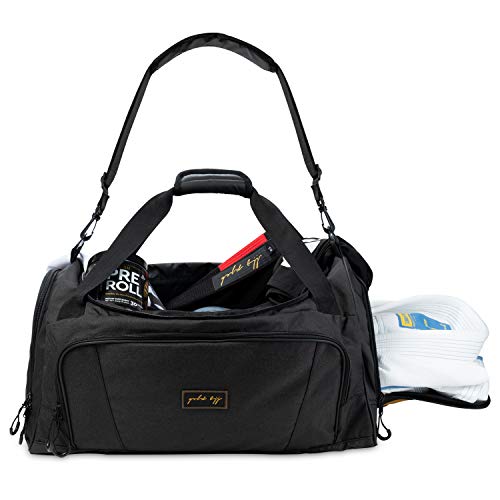
Capacity: 44L
Type: Dedicated duffel
After customer feedback requesting more capacity than the Gatame backpack, Gold BJJ created the Randori duffel. This is their “tournament bag”—designed for competitors who need to pack multiple gis and travel gear.
What Makes It Great:
The 44L capacity is massive. Two full gis, multiple rashguards, belts, clean clothes, toiletries, and you’ll still have room. The extra-large waterproof gi pocket features an oversized opening that makes packing easy, even when you’re rushing between matches.
Gold BJJ applied the same quality standards as their backpack: reinforced stitching, premium materials, excellent zippers. This bag is built to survive airline baggage handlers and years of tournament travel.
Real-World Performance:
The full-length front pocket is brilliantly designed for quick access items—keys, phone, finger tape, and mouthguard. Mesh organizers in side pockets keep your phone secure and accessible.
Dual handle options (duffel carry handle plus over-shoulder strap) give you flexibility in how you carry it. The structured base prevents the floppy, overstuffed look that cheaper duffels develop.
The waterproof pocket doesn’t just resist water—it actually keeps moisture contained. Pack a soaking wet gi after your matches and your clean backup gi stays perfectly dry.
The trade-off is versatility. No backpack straps mean heavy loads strain your shoulder on long carries. This is purpose-built for tournament travel, less ideal for daily gym commutes.
Pros:
- Massive 44L capacity for multiple gis
- Extra-large waterproof gi pocket
- Premium Gold BJJ quality construction
- Full-length quick-access front pocket
- Mesh organizers for phone/valuables
- Dual carry handles (duffel + shoulder)
- Structured base maintains shape
- Perfect for competition travel
- Airline-ready durability
Cons:
- Most expensive option ($80-95)
- No backpack carry mode
- Heavy loads strain shoulder
- Overkill for daily single-gi training
- Large size may be too much for some
Who Should Buy This:
Competitors traveling to tournaments regularly, anyone doing weekend seminars requiring multiple gis and gear changes, people who prioritize maximum capacity and premium quality over daily commute convenience.
Backpack vs Duffel: Which Should You Choose?
Backpack Advantages
Best for:
- Daily gym commutes (especially walking/biking)
- Single gi training sessions
- Office-to-gym transitions
- Keeping hands free
Pros:
- Comfortable hands-free carry
- Better weight distribution on shoulders
- Easier to carry on bike/motorcycle
- More professional appearance
- Better for public transportation
Cons:
- Usually smaller capacity
- Less room for multiple gis
- Can’t lay flat to pack
- Limited quick-access to gear
Duffel Advantages
Best for:
- Competition travel (multiple gis)
- Weekend seminars
- Gym-to-home only (driving)
- Maximum capacity needs
Pros:
- Larger capacity (fits multiple gis)
- Opens wide for easy packing
- Can lay flat for organization
- Better for car storage
Cons:
- One-shoulder carry causes fatigue
- Requires free hand
- Awkward on bikes/motorcycles
- Takes up more space
Hybrid/Convertible Option
Why they work: Bags like GrappleGear or Elite Sports Jaco offer both modes, giving you flexibility without owning multiple bags.
Trade-offs: Slightly heavier than dedicated bags, backpack straps may be less padded than pure backpacks, but versatility often outweighs these compromises.
My recommendation: If you can only buy one bag, get a convertible. Use backpack mode for daily training, duffel mode for competition travel.
BJJ Gi Bag Buying Guide
How Much Capacity Do You Need?
25-30L (Small Backpacks):
- One gi + minimal gear
- Daily training only
- Not suitable for competition travel
- Examples: Venum Trainer Lite, Gold BJJ Gatame
35-45L (Medium Duffels/Large Backpacks):
- One to two gis comfortably
- Works for daily training AND weekend seminars
- Best all-around capacity
- Examples: GrappleGear, Elite Sports Jaco
44L+ (Large Duffels):
- Two to three gis plus extensive gear
- Competition travel focused
- May be overkill for daily training
- Examples: Gold BJJ Randori
Essential Features Checklist
Must-Have:
- Waterproof or ventilated wet compartment
- Reinforced stitching at stress points
- Quality zippers (YKK preferred)
- Comfortable carry straps
- Fits at least one gi comfortably
Nice-to-Have:
- Multiple organization pockets
- Dedicated belt compartment
- Shoe compartment
- Water bottle pockets
- Laptop sleeve (for office commuters)
Quality Indicators
Good Signs:
- Reinforced stitching at all stress points
- YKK or similar quality zippers
- Thick, durable fabric (600D Cordura or similar)
- Brand with BJJ-specific focus
- Positive reviews from practitioners
Red Flags:
- Thin, flimsy fabric
- Weak stitching visible at seams
- Cheap plastic zippers
- Generic “martial arts” branding (not BJJ-specific)
- No wet/dry separation
Budget Considerations
$35-$50 (Budget): 1-2 year lifespan, decent features including basic wet/dry separation, good for regular training. Elite Sports Jaco is the best value here.
$50-$70 (Mid-Range): 2-3 year lifespan, excellent features including proper ventilated compartments, ideal for frequent training. GrappleGear offers the best versatility.
$70-$95 (Premium): 3-5+ year lifespan, exceptional features including true waterproof compartments, built to last through belt progression. Gold BJJ Gatame (backpack) and Randori (duffel) are worth the investment.
Cost-Per-Use Analysis:
$40 bag lasting 18 months = $2.22/month
$75 bag lasting 3 years = $2.08/month
Premium bags offer similar or better long-term value if you’re committed to BJJ.
Gi Bag Care and Maintenance
Preventing Odors
DO:
- Empty your bag immediately after training
- Air out bag completely between uses
- Wash wet compartment regularly
- Use bag deodorizer or baking soda
- Store in well-ventilated area
DON’T:
- Leave gi in bag overnight (bacteria heaven)
- Store in car trunk (heat accelerates odors)
- Close zippers when storing (trap moisture)
- Ignore persistent smells (address immediately)
Cleaning Your Bag
Regular Maintenance (Weekly):
- Wipe down interior with damp cloth
- Air out all compartments
- Check zippers for debris
- Inspect straps for wear
Deep Clean (Monthly):
- Empty all pockets completely
- Hand wash interior with mild soap
- Scrub waterproof compartments
- Let air dry completely (24+ hours)
- Optional: Spray with fabric freshener
Machine Washing: Most BJJ bags should NOT go in washing machines (damages waterproof coatings and stress stitching). Hand wash only unless manufacturer explicitly approves machine washing.
Extending Bag Life
Rotation Strategy: If you train 5+ times per week, consider owning two bags. Rotate them weekly to give each bag time to fully air out and dry.
Repair Early:
- Small zipper issues → Fix immediately with zipper lubricant
- Loose stitching → Reinforce with needle and thread
- Small tears → Patch before they expand
- Worn straps → Replace before they fail
Storage: Store bags empty, unzipped, in dry area. Don’t stack heavy items on top (damages structure).
Frequently Asked Questions
What size bag do I need for BJJ?
For daily training with one gi: 25-30L backpack is sufficient.
For weekend seminars or two gis: 35-45L duffel or large backpack.
For competition travel with multiple gis: 44L+ duffel.
Most practitioners training 3-4x per week do well with a 35-40L bag that handles both daily training and occasional travel.
Do I really need a waterproof compartment?
YES. A sweaty gi will contaminate everything in your bag, create odors, and promote mildew. A waterproof or ventilated wet compartment is the single most important feature in a BJJ bag.
Can I use a regular gym bag for BJJ?
You CAN, but you’ll regret it. Generic gym bags lack wet/dry separation, adequate ventilation, and BJJ-specific organization. They also tend to fall apart faster under the weight of gis and gear.
How long should a BJJ bag last?
Budget bags ($30-50): 6-18 months with regular training
Mid-range bags ($50-70): 1-3 years with regular training
Premium bags ($70-100): 3-5+ years with regular training
Lifespan depends heavily on training frequency, care, and build quality.
Should I get a backpack or duffel?
Get a backpack if: You walk/bike to training, commute on public transportation, want hands-free carry, only need one gi capacity.
Get a duffel if: You drive to training, compete regularly (need multiple gis), prefer traditional gym bag style, want maximum capacity.
Get a convertible if: You want one bag for both daily training and competition travel.
What’s the difference between a $30 bag and an $80 bag?
$30 Budget Bag:
- Basic wet/dry separation (if any)
- Thinner materials
- Standard zippers
- 6-12 month lifespan
- Adequate for beginners
$80 Premium Bag:
- True waterproof compartments
- Heavy-duty 600D+ materials
- YKK quality zippers
- 3-5 year lifespan
- Purpose-built by practitioners
The premium bag offers better value-per-use over time if you’re committed to training.
Which BJJ Gi Bag Should You Get?
Best Overall Choice: GrappleGear Duffel/Backpack
For most practitioners, the GrappleGear bag offers the best combination of capacity, versatility, and value. The 2-in-1 design works for daily training and competition travel, the 45L capacity fits multiple gis, and at $50-65 it’s priced fairly for the quality.
Best Daily Training Bag: Gold BJJ Gatame Backpack
If you train 4+ times per week and want a premium daily bag, the Gold BJJ Gatame is worth the investment. True waterproof gi pocket, superior construction, and comfortable carry make it the bag you’ll use from white to black belt.
Best Budget Option: Elite Sports Jaco
Testing out BJJ or on a tight budget? The Elite Sports Jaco delivers decent functionality for $35-50. It won’t last forever, but it’ll get you through your first year of training without breaking the bank.
Get Organized and Train
The right BJJ bag makes training more convenient, keeps your gear organized, and prevents the dreaded “stink bag” syndrome that marks beginners.
Any of these four bags will serve you well—the choice comes down to your budget, training frequency, and whether you need competition travel capacity.
The most important thing? Stop leaving your gi in a plastic grocery bag. Get a proper BJJ bag, keep your gear organized, and focus on what matters: consistent training.
See you on the mats.
OSS,
Jameson Ryan
Affiliate Disclosure: This article contains affiliate links. If you purchase through these links, I may earn a small commission at no additional cost to you. I only recommend gear I have personal experience with or have thoroughly researched. Thank you for supporting BJJ Gear Guide.
Last Updated: August 2026